Ever wondered what it feels like to be in the heat of virtual battle where every split second counts? First-person shooter (FPS) games put players right in the action delivering an adrenaline-pumping experience through the eyes of their digital avatar. From classic titles like Doom to modern masterpieces like Call of Duty FPS games have revolutionized the gaming industry.
These heart-racing games combine quick reflexes strategic thinking and precise aim to create an immersive combat experience. Players navigate through detailed environments with weapons in hand engaging enemies and completing objectives while viewing everything from a first-person perspective. It’s like being the star of your own action movie except you’re in control of every move dodge and trigger pull.
Understanding First-Person Shooter (FPS) Games
First-person shooter games transport players into immersive virtual environments where they view the world through their character’s eyes. The genre centers on combat-focused gameplay with an emphasis on accuracy precision weapon handling.
Key Elements of FPS Games
Modern FPS games incorporate five essential components:
- Weapon Systems: Players access diverse arsenals including pistols rifles shotguns with unique attributes like damage range accuracy
- Health Management: Characters have health points that deplete from enemy damage requiring strategic use of health packs armor pickups
- Movement Mechanics: Advanced mobility options enable running jumping crouching sliding wall-running
- Mission Objectives: Goals range from eliminating enemies capturing points defending positions completing specific tasks
- Competitive Elements: Multiplayer modes feature ranking systems matchmaking team-based gameplay individual performance metrics
Player Perspective and Gameplay Mechanics
The first-person viewpoint places players directly in their character’s position displaying only their arms weapons. This perspective creates immediate engagement through:
| Gameplay Element | Player Experience |
|---|---|
| Field of View | 90-120 degree visibility range |
| Weapon Handling | Real-time aiming recoil management reload mechanics |
| Environmental Interaction | Door opening switch activation item collection |
| Combat Feedback | Hit markers damage indicators kill confirmations |
Players control character movement using keyboard mouse combinations for precise aiming weapon switching environmental navigation. The interface displays vital information including ammunition count health status radar minimap position indicators.
Evolution of FPS Games
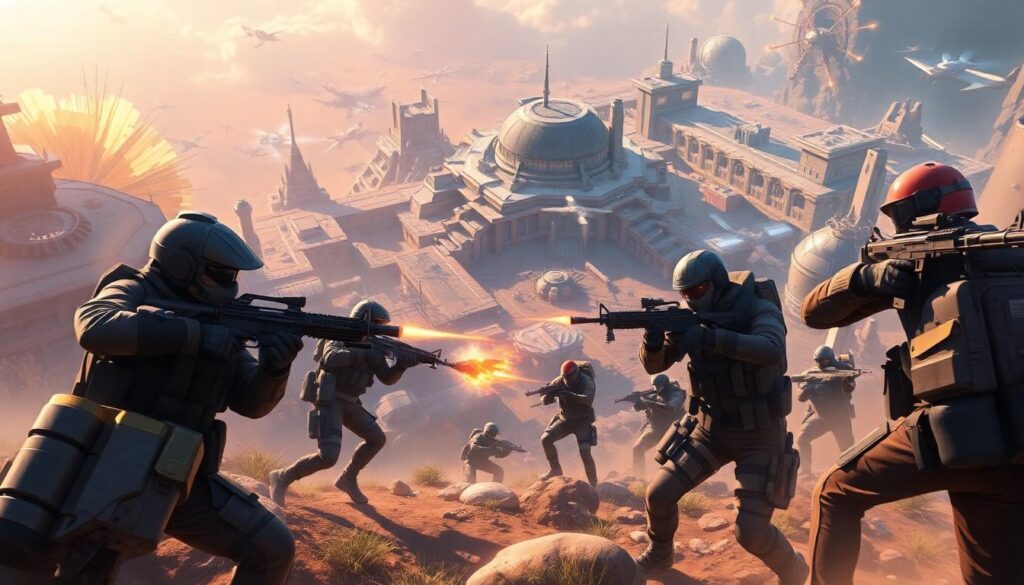
First-person shooter games transformed from simple 2D maze games into sophisticated 3D virtual battlegrounds over three decades. This evolution marked significant technological advancements in gaming graphics engines sound systems multiplayer capabilities.
Early FPS Milestones
The 1992 release of Wolfenstein 3D established core FPS mechanics with texture-mapped walls maze-like levels weapon-based combat. Doom (1993) revolutionized the genre by introducing enhanced graphics dynamic lighting effects multiplayer functionality through LAN connections. Quake (1996) brought true 3D environments mouse-look controls fast-paced movement mechanics that defined competitive gameplay. Half-Life (1998) elevated storytelling in FPS games through seamless narrative integration physics-based puzzles interactive environments. Counter-Strike (1999) emerged as a multiplayer phenomenon focusing on team-based tactical combat weapon economics round-based matches.
Modern FPS Gaming
Contemporary FPS titles feature photorealistic graphics advanced AI systems destructible environments. Call of Duty Battlefield implement large-scale multiplayer battles cross-platform play seasonal content updates. Battle royale games like Apex Legends Warzone combine FPS mechanics with survival elements team coordination extensive map exploration. Tactical shooters such as Rainbow Six Siege Valorant emphasize strategic gameplay operator abilities environmental destruction. Modern engines support ray tracing DLSS technology realistic bullet physics advanced particle systems. Competitive FPS esports attract millions of viewers through professional leagues tournaments streaming platforms.
Popular FPS Game Categories
First-person shooter games span diverse categories offering unique gameplay experiences. Each category features distinct settings environments mechanics that attract different player preferences.
Military and Tactical Shooters
Military FPS games emphasize realistic combat scenarios based on modern warfare. Games like Call of Duty Modern Warfare Rainbow Six Siege replicate authentic military equipment tactics weapon ballistics. Players engage in strategic team-based operations featuring specialized roles coordinated objectives authentic military formations. These games incorporate realistic elements such as bullet drop weapon recoil limited ammunition management. The gameplay focuses on tactical decision-making precise teamwork clear communication between squad members.
| Popular Military FPS Titles | Key Features |
|---|---|
| Call of Duty | Fast-paced combat squad-based missions |
| Rainbow Six Siege | Tactical breaching destructible environments |
| Battlefield | Large-scale warfare vehicle combat |
Sci-Fi and Fantasy FPS
Sci-fi FPS games transport players to futuristic alien worlds with advanced technology exotic weaponry. Games like Doom Eternal Destiny 2 Halo feature imaginative settings supernatural abilities energy-based weapons. Players combat otherworldly creatures using plasma rifles laser guns supernatural powers. These games incorporate unique movement mechanics such as double jumping wall running gravity manipulation. Environmental hazards alien technology enhanced mobility systems create distinctive combat experiences.
| Popular Sci-Fi FPS Titles | Key Features |
|---|---|
| Doom Eternal | Fast-paced demon slaying glory kills |
| Destiny 2 | Space magic looter shooter mechanics |
| Halo | Energy shields alien technology combat |
Essential Skills for FPS Gaming
Mastering first-person shooter games requires developing specific abilities that enhance performance during intense combat scenarios. Professional players combine precise mechanical execution with tactical awareness to excel in competitive environments.
Aiming and Movement Techniques
Advanced aiming mechanics form the foundation of FPS gameplay excellence. Players develop muscle memory through consistent mouse sensitivity settings to achieve precise target tracking. Crosshair placement at head level anticipates enemy positions while pre-aiming common angles increases reaction speed. Movement techniques include counter-strafing to maintain accuracy while changing direction, bunny hopping to maintain momentum across terrain and crouch-peeking to minimize exposure during combat. The combination of crosshair discipline with dynamic positioning creates unpredictable engagement patterns that challenge opponents.
Strategic and Team Play
Effective communication drives successful team coordination in competitive FPS matches. Players share enemy positions using clear callouts specific to each map’s locations. Resource management involves coordinating utility usage like flashbangs grenades or smoke screens to control space. Teams establish roles including entry fraggers who initiate site takes support players who provide cover fire through angles. Map awareness enables players to predict enemy rotations based on timing sound cues control points. Strategic positioning creates crossfire setups that limit enemy movement options while maximizing trade potential during engagements.
Impact of FPS Games on Gaming Culture
FPS games transformed gaming culture by introducing competitive esports tournaments with prize pools exceeding $50 million annually. Professional leagues like ESL Pro League attract 25+ million viewers per season, establishing FPS competitions as mainstream entertainment.
Cultural shifts emerged through:
- Creating dedicated gaming communities on platforms like Discord, Twitch, Steam
- Introducing gaming terminology into everyday language: “headshot,” “camping,” “respawn”
- Establishing streaming careers with top FPS content creators earning $1M+ yearly
- Developing team-based competitive scenes across 50+ countries
The social aspects revolutionized multiplayer gaming through:
- Voice chat systems enabling real-time communication
- Clan systems fostering long-term player relationships
- Ranked matchmaking creating skill-based communities
- Tournament circuits connecting players globally
FPS games influenced broader entertainment:
| Entertainment Sector | Impact Metrics |
|---|---|
| Movie Industry | 15+ FPS-inspired films |
| Streaming Content | 8.2B hours watched (2022) |
| Content Creation | 500K+ dedicated channels |
| Gaming Hardware | $3.5B market value |
Technical innovations from FPS development drove advances in:
- Graphics rendering technology
- Network infrastructure optimization
- Physics simulation systems
- Virtual reality integration
These cultural impacts established FPS games as cornerstones of digital entertainment, shaping how millions interact with gaming technology daily. Top titles consistently rank among Steam’s most-played games, maintaining 500,000+ concurrent players during peak hours.
Conclusion
FPS games stand as pillars of modern gaming culture offering players an unmatched blend of immersive action and strategic depth. From their humble beginnings to today’s sophisticated titles they’ve revolutionized how people experience virtual combat and competitive gaming.
The genre’s influence extends far beyond entertainment shaping technological innovation gaming communities and professional esports. Whether players seek realistic military simulations or fantastical sci-fi adventures FPS games continue to evolve and captivate audiences worldwide.
As technology advances and new gaming experiences emerge FPS games will undoubtedly remain at the forefront of interactive entertainment delivering ever more engaging and sophisticated experiences to players across the globe.